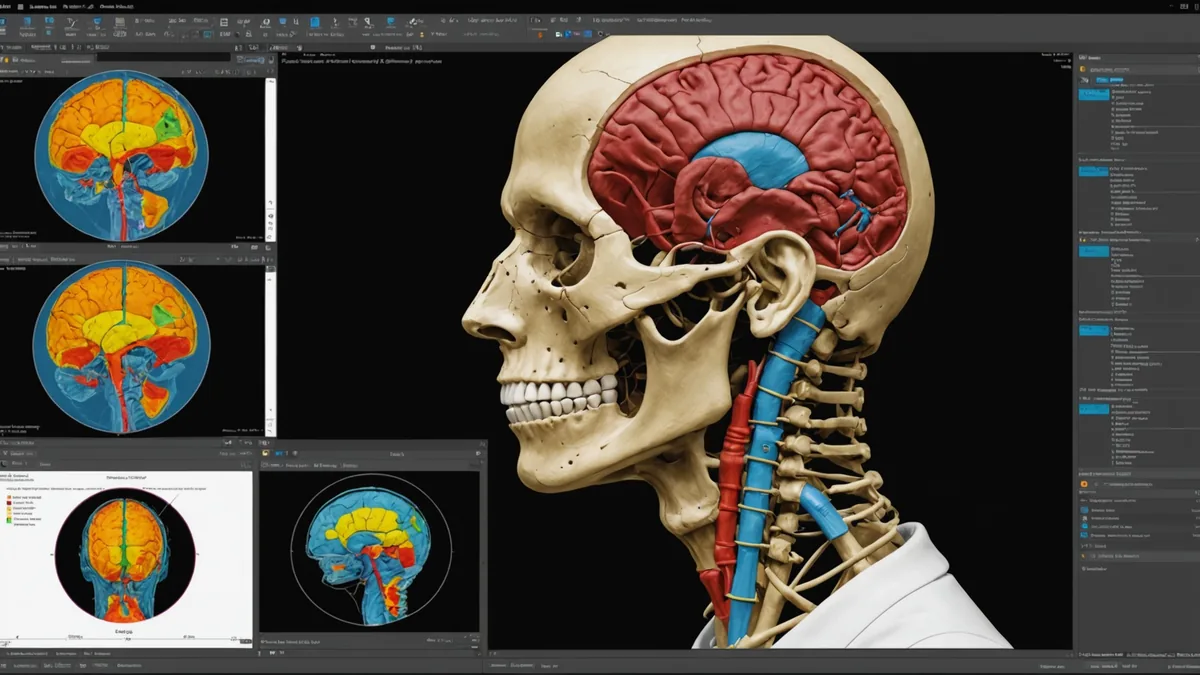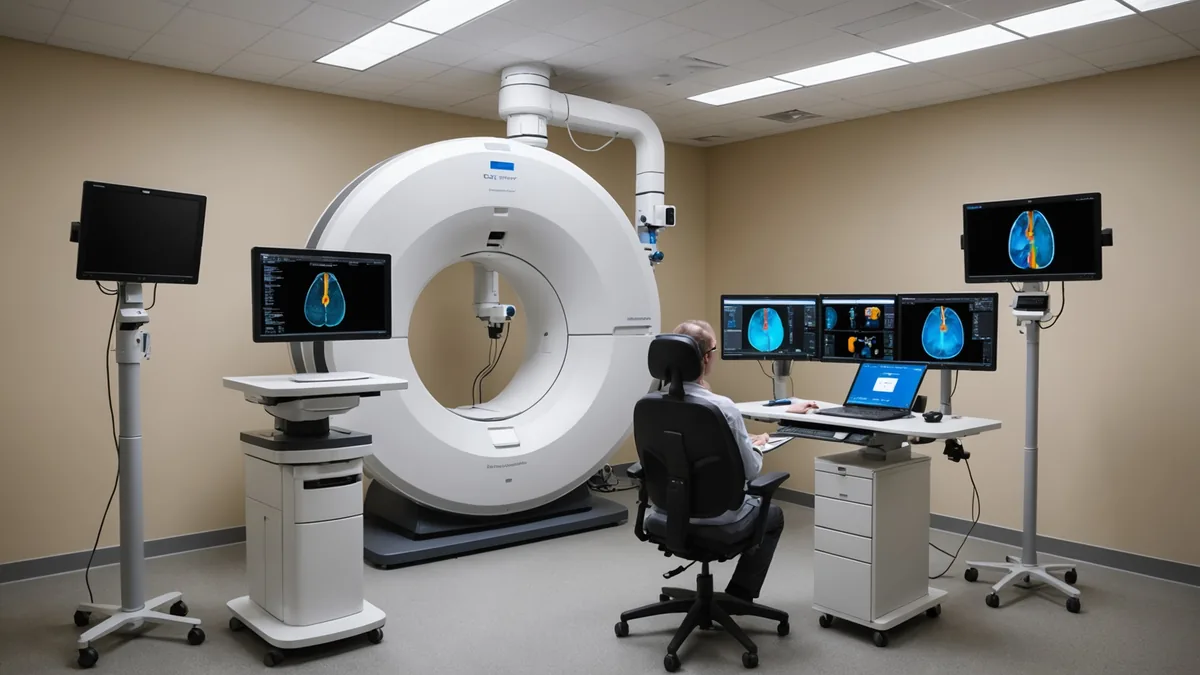


Prostate cancer remains one of the most common indications for external beam radiotherapy worldwide, and intensity-modulated radiation therapy has become the dominant delivery technique at most major centers. The planning challenge is simple to state and genuinely difficult to execute: deliver a tumoricidal dose to the prostate while keeping adjacent structures below thresholds linked to late toxicity in controlled trials. We work on this problem daily at Airato, and what follows is how we think about it.
Prescription Dose: Two Regimens, Different Risk Profiles
Conventional fractionation targets 78–80 Gy in 39–40 fractions of 2 Gy each. Long-term biochemical control data from PROG 9509, MRC RT01, and DART 01/05 GICOR collectively support this dose over the earlier 70 Gy standard, with acceptable late rectal toxicity when constraints are respected.
Moderate hypofractionation—70 Gy in 28 fractions of 2.5 Gy—has matured significantly. The CHHiP trial (n=3,216) demonstrated non-inferiority of 60 Gy/20 fx (and borderline non-inferiority for 57 Gy/19 fx) versus 74 Gy/37 fx at five years. PROFIT showed equivalent results for 60 Gy/20 fx. The RTOG 0415 trial compared 70 Gy/28 fx directly with 73.8 Gy/41 fx and reported non-inferior disease-free survival at five years. What these trials do not fully resolve: late genitourinary toxicity curves in hypofrac sometimes continue rising past year 5, so constraint selection for moderate hypofrac deserves conservatism.
RTOG 0126 Rectal Constraints: The Reference Standard
The RTOG 0126 dose-volume constraints for the rectum have served as the field's primary reference for conventional fractionation since trial enrollment closed:
- V75 < 15%
- V70 < 25%
- V65 < 35%
- V60 < 50%
- V50 < 50%
These thresholds were conservative by design. QUANTEC's 2010 rectal toxicity review refined the picture: the probability of late rectal bleeding grade ≥2 rises sharply when V70 exceeds 20–25%. The NTCP model coefficients from Michalski et al. suggest that reducing V70 from 25% to 15% cuts estimated grade ≥2 bleeding by roughly 3–5 percentage points—modest in absolute terms, but meaningful at scale.
Modern multi-institution data have pushed local practice in many centers toward tighter rectal constraints: V70 < 15% is now achievable with IMRT and is listed as an objective (not merely a hard limit) in several institutional protocols I have reviewed. Whether this translates to lower observed toxicity at 5–10 years depends heavily on contour quality, daily positioning reproducibility, and whether the rectal wall or the rectal lumen was used for constraint definition—these are not interchangeable, and comparing across institutions requires knowing which was used.
Bladder Constraints and Filling Protocol
Bladder constraints in RTOG 0126 are less stringent than rectal constraints, reflecting higher tolerance of the bladder wall:
- V80 < 15%
- V75 < 25%
- V70 < 35%
- V65 < 50%
What the constraint table cannot capture: filling state at simulation and at each treatment fraction matters enormously. A comfortably full bladder—typically 300–400 mL, achieved by drinking 500 mL of water 45 minutes before CT simulation—displaces the posterior bladder wall away from the high-dose region and reduces the fraction of bladder volume receiving doses above 70 Gy by 15–25% compared with an empty bladder, based on in-house phantom and patient data.
Reproducibility is the harder problem. Bladder volume varies ±30–40% across fractions even when patients follow a standardized drinking protocol. Some centers use ultrasound pre-treatment volume checks; others accept the variability as part of the planning margin strategy. Adaptive planning—whether full online adaptive or triggered re-simulation—is the principled answer, though it requires infrastructure not universally available.
Femoral Heads and Penile Bulb
Femoral head constraints are generally less limiting for prostate planning than rectal or bladder goals. The standard objective is Dmax < 50 Gy (or V50 < 5%), derived from QUANTEC data showing femoral head necrosis risk below 1% at this threshold. In most IMRT plans, femoral head doses are well within tolerance without explicit optimization; the constraint becomes relevant mainly when the prostate extends laterally or when nodal fields are included.
The penile bulb deserves more attention than it typically receives. RTOG 0321 and subsequent analyses found that mean penile bulb dose above 52 Gy was associated with increased erectile dysfunction rates (HR approximately 1.8 in some cohorts), though causality is confounded by patient age, baseline function, and androgen deprivation therapy status. Most contemporary protocols list mean penile bulb dose ≤50 Gy as an objective rather than a hard constraint. It is achievable without sacrificing PTV coverage in the majority of cases, though post-TURP anatomy with cavity distortion can complicate posterior dosimetry.
Per-Institution Variation in Constraint Setting
Constraint policies vary more across institutions than published guidelines suggest. In a 2019 survey of European radiotherapy centers treating prostate cancer, rectal V70 objectives ranged from <10% to <30% across responding centers. This reflects genuine uncertainty in the NTCP literature, differences in how rectum is contoured (wall-only vs. lumen-inclusive), and varying confidence in daily image guidance reproducibility.
I find this variation underappreciated in the AI planning literature. A model trained on one institution's planning objectives will not automatically generalize to another's constraint philosophy. This is why institutional constraint templates—not generic published values—should drive AI plan generation, and why Airato's constraint engine ingests per-center DVH objectives rather than fixed hardcoded thresholds.
What AI Planning Changes—and What It Cannot
In Airato's pilot program at three community radiation oncology departments in Miyagi and Iwate prefectures, AI-generated prostate IMRT plans achieved a 94% first-iteration constraint pass-rate across the institutional DVH objectives listed above. Manual planning in the same cohort ran at 76%. The gap narrowed when cases were stratified by difficulty: for straightforward anatomy (no prior surgery, no significant rectal gas, standard prostate volume 30–60 cc), AI and experienced planners converged. The gap was largest for intermediate-complexity cases—post-biopsy edema, slightly enlarged prostate, borderline rectal proximity—where AI handled the competing objectives systematically rather than relying on planner intuition about which constraint to relax first.
A 94% pass rate. Not 100%. That matters to say plainly.
What AI-assisted planning cannot address:
- Poor immobilization. Systematic geometric uncertainty from patient movement invalidates the DVH calculation regardless of how well the optimizer performs. A plan that passes all paper constraints but is delivered to a prostate shifted 8 mm anteriorly due to rectal filling is not a good plan.
- Post-TURP anatomy. Transurethral resection creates a posterior urethral defect that alters the relationship between the prostate base, bladder neck, and anterior rectal wall. The AI model must be shown this anatomy explicitly—it cannot infer it from the prostate contour alone, and standard prostate models often underestimate the dose to the residual tissue bridge near the defect.
- Seminal vesicle extension ambiguity. Whether and how far to include the seminal vesicles in the PTV (proximal 1 cm vs. full SV inclusion) is a clinical decision based on risk stratification, not a planning decision. Different clinical choices produce fundamentally different target volumes, and no optimizer can substitute for the radiation oncologist's staging judgment.
MRI-Guided Adaptive Planning: A Different Constraint Paradigm
MR-linac systems—the MRIdian in particular—change the constraint problem in one important way: online adaptive re-planning on each fraction allows the rectal and bladder constraints to be evaluated against the actual anatomy at the time of treatment, not the simulated anatomy from days or weeks earlier. The clinical implication is that tighter planning constraints become achievable in the fraction-averaged sense, because anatomy is actively managed rather than hoped to match simulation.
Early data from Radboud, UCLA, and Heidelberg show rectal V75 values consistently below 8–10% with full online adaptation, compared with 12–18% achievable with conventional IGRT and IMRT. The tradeoff is workflow: online adaptive sessions run 45–60 minutes versus 10–15 minutes for conventional IGRT, which is not a trivial consideration for community hospitals.
We are currently evaluating whether Airato's constraint prediction module can accelerate MR-linac adaptive planning by generating a warm-start optimized plan from the re-contoured anatomy in under three minutes, versus the 8–12 minutes typical of current commercial adaptive workflows. We expect to publish preliminary results in the second half of 2026.
Summary
OAR constraint management in prostate IMRT is not primarily a technology problem—it is a process problem. The constraints exist. The physics is well understood. The gap between constraint compliance on paper and actual delivered dose sits in immobilization quality, anatomy variability between fractions, and the judgment calls planners make when competing objectives conflict. AI planning narrows the judgment gap on routine cases; it does not eliminate the need for experienced clinical oversight when anatomy or prior surgery makes the planning decision genuinely hard.
That distinction is worth keeping clear.