

Manual IMRT planning takes 2–5 hours per case — and 15–25% of plans still come back for re-optimization after physician review. AIVOT gives your dosimetry team a clinically validated starting point trained on thousands of approved plans, cutting average plan completion time to 40 minutes.
Average reduction in IMRT plan completion time in pilot deployments
Manual IMRT planning cut to 40 minutes average with AIVOT initialization
Active deployment in radiation oncology departments across Japan
Plans initialized with AIVOT passing physician review on first submission in pilot cohort
AIVOT is not a single algorithm. It is a coordinated set of clinical AI capabilities — dose prediction, plan quality scoring, anatomy-aware OAR sparing, DICOM-RT integration, and retrospective audit — each addressing a specific failure point in the manual planning workflow.
AIVOT’s core deep-learning model was trained on thousands of physician-approved IMRT plans across common treatment sites: prostate, head-and-neck, breast, and lung. Given a patient’s CT simulation data and contoured structure set, AIVOT predicts the achievable dose distribution for that specific anatomy and generates an optimized initial fluence map with dose-volume constraint parameters already tuned to the patient. Dosimetrists begin their optimization session from a clinically validated baseline rather than an empty starting point. In our pilot deployments, that difference reduced plan completion time by 60–80% and pushed the first-pass physician approval rate to 93%.

AIVOT operates entirely within the DICOM-RT standard already used by your treatment planning system. Your dosimetrist exports the patient’s structure set and CT images using the same DICOM-RT workflow they use for any inter-system transfer. AIVOT returns an AI-initialized RT Plan object the dosimetrist imports directly into Eclipse, RayStation, or Pinnacle — no HL7 middleware, no reformatting, no new vendor contracts beyond AIVOT. Our cloud infrastructure is HIPAA-compliant and Japan JIS Q 27001 certified. The integration requires what is already in the department.
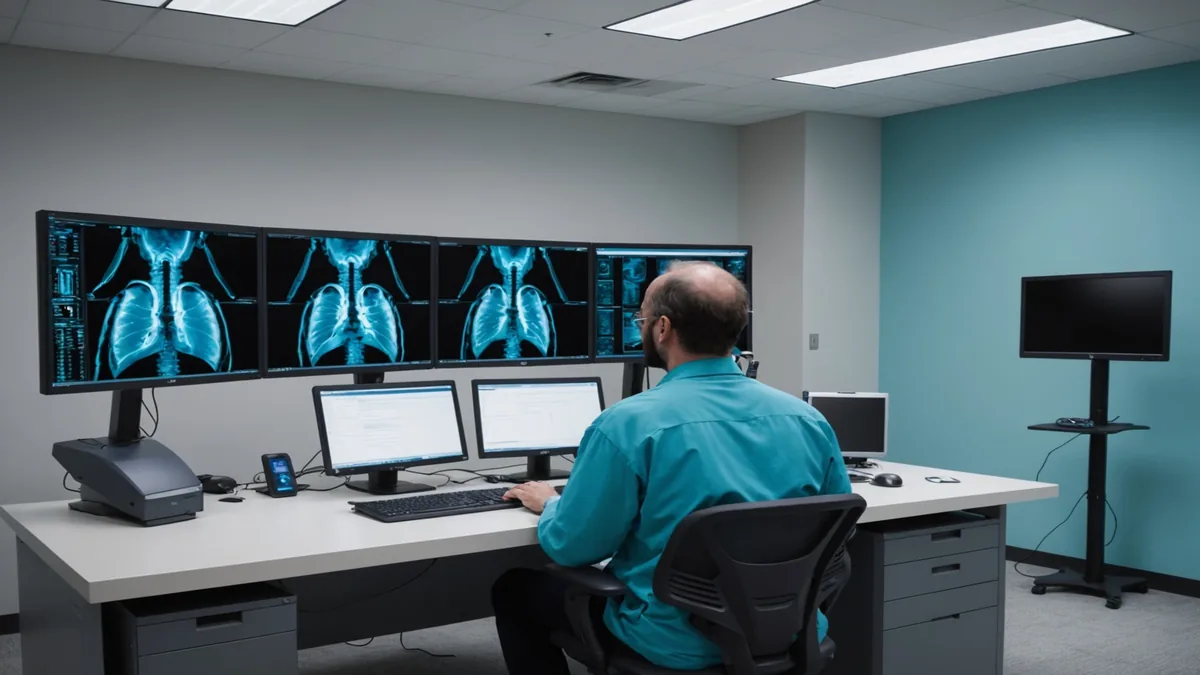
AIVOT fits inside the clinical workflow your dosimetry team already follows. No new systems to learn, no changes to how physicians contour or review. The four steps below cover what happens between the initial DICOM-RT export and the moment the dosimetrist opens the AI-initialized plan in their TPS.
The dosimetrist exports the patient’s CT simulation images and physician-contoured target volumes — GTV, CTV, PTV — plus organs-at-risk structures from the treatment planning system using standard DICOM-RT export. This is the same export workflow used for any inter-system data transfer; no additional steps or tools are required at the department level.
AIVOT ingests the DICOM-RT structure set and CT data in our HIPAA-compliant cloud environment. The dose prediction model analyzes the patient’s specific anatomy — target volumes, OAR positions, treatment site — and generates a predicted dose distribution calibrated to what is clinically achievable for that anatomy. Beam angle candidates and dose-volume constraint parameters are produced as part of the same analysis pass.
AIVOT returns an optimized initial fluence map and constraint set as a DICOM-RT RT Plan object. The dosimetrist imports it directly into Eclipse, RayStation, or Pinnacle as a starting point for their optimization session. We measured 40 minutes average dosimetrist time per plan in our pilot cohort — down from 3.2 hours starting from scratch. The plan file is a standard DICOM-RT object; it behaves identically to any other plan file in the TPS.
The dosimetrist refines the AI-initialized plan using their normal TPS tools and submits for physician review. AIVOT’s plan quality scoring runs in parallel, delivering a structured report with ICRU-compliant conformity, homogeneity, and OAR dose metrics benchmarked against the department’s own historical archive. Physician approval — or any modification request — remains entirely in clinical hands. AIVOT initializes; the team decides.
Community hospitals treating 200–800 IMRT patients annually rarely have the dosimetrist depth to absorb a 2–5 hour planning cycle per case. We looked at where AI-assisted initialization changes the math — and where it doesn’t.
The certified dosimetrist shortage is not a temporary pipeline problem. Regional hospitals are already rationing IMRT capacity. Here is what the data shows about the structural gap — and what departments are doing about it today.
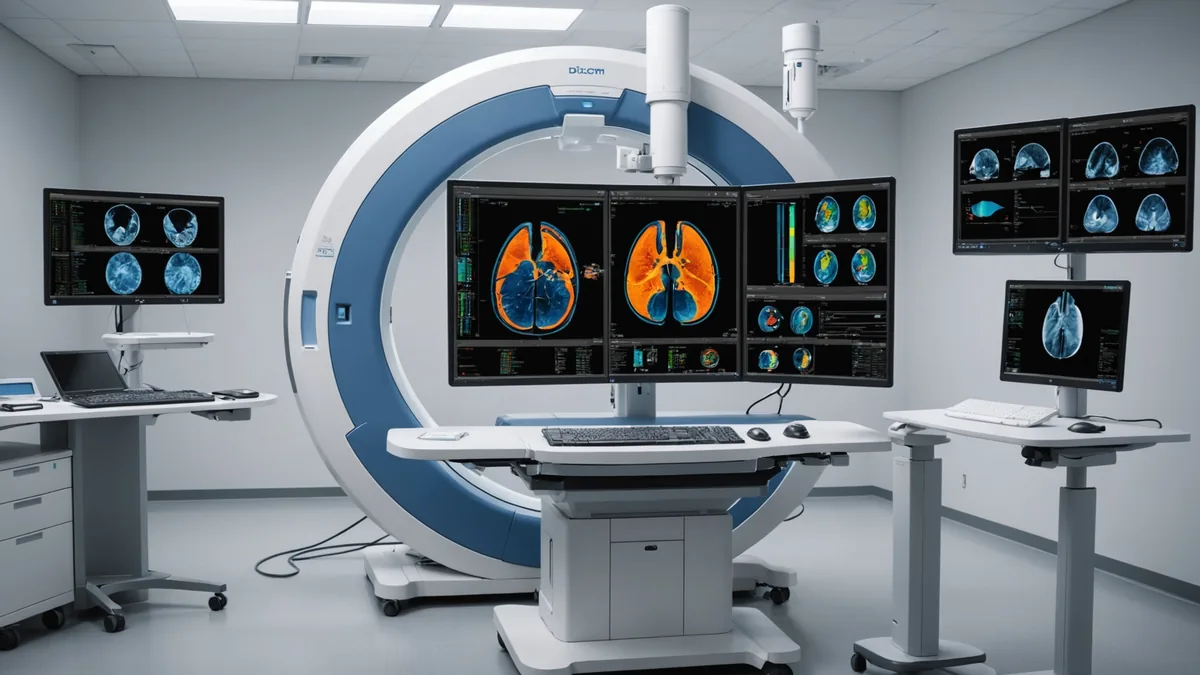
DICOM-RT is the common language of radiation therapy — but connecting an external AI service to Eclipse or RayStation without middleware takes careful sequencing. This is how the import/export handoff actually works.
We run structured pilot deployments with community hospital radiation oncology departments. Bring one treatment site and a representative case set. We will show you exactly where the time reduction happens — and where you still need your dosimetrist’s judgment.