
A patient finishes their CT simulation on a Monday. They won't lie on a treatment table until — on average, in Japan — a Thursday two weeks later. Fourteen point six days. That is the national median from JASTRO's 2022 departmental survey, covering 189 radiation oncology departments across the country.
I've seen that number come up in a lot of conversations, usually followed by a shrug. The assumption is that complexity is fixed. It isn't. The delay is a pipeline, and each segment of that pipeline has a specific failure mode.
The Pipeline, Stage by Stage
Sim-to-start breaks down into four distinct phases. They don't always run sequentially. They often do.
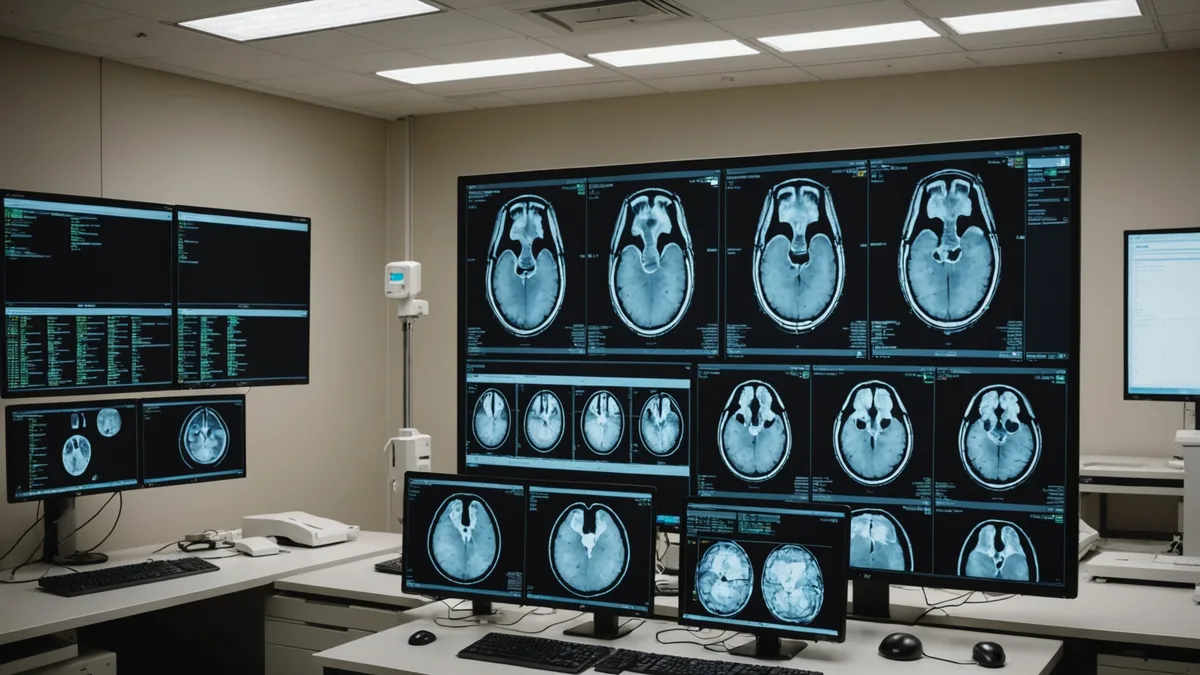
Contouring review: approximately 3 days. After CT images are acquired and transferred to the TPS, a radiation oncologist delineates target volumes and organs at risk. In a department with two attending physicians and six active patients in planning simultaneously, review slots fill fast. This step isn't bottlenecked by difficulty — it's bottlenecked by scheduling. The physician may be in clinic, in consultation, or reviewing other plans. Three days is routine. Five days is not exceptional.
Plan creation: approximately 5 days. This is the largest single contributor. The dosimetrist queue at a typical Japanese community hospital runs three to five active plans at once. Complex IMRT cases — pelvic, head and neck, lung — take four to eight hours of optimization and iteration time per plan. A department with two dosimetrists handling curative intent cases is working at capacity before accounting for re-plans. The JASTRO data shows planning queue time alone accounts for roughly 35% of total sim-to-start delay.
Physicist QA: approximately 2 days. Secondary monitor unit calculation, plan-independent dose checks, and — for IMRT — patient-specific QA measurements. These can't be parallelized with planning. The physicist needs a finalized plan. Scheduling the linac for measurement adds another half-day to one day on top of calculation time.
Scheduling: approximately 2 days. The patient needs to be contacted, a treatment slot assigned, and pre-treatment imaging scheduled if applicable. For departments running multiple linacs across split shifts, this is faster. For departments with a single machine and fixed daily capacity, slots book out two to three business days ahead. Add a weekend and you've absorbed your buffer.
Twelve days minimum, under favorable conditions. Fourteen to eighteen under typical load.
Why the Wait Isn't Just Inconvenient
Delays matter differently by tumor site and biology.
For HPV-positive head and neck cancers, the evidence is specific and uncomfortable. Chen et al. (2015) quantified local control loss at 2–3% per week of delay beyond initial simulation. These tumors have high proliferative indices during the waiting period. The patient is not in stasis while the dosimetrist queue moves.
Cervical cancers show similar sensitivity. Bladder and lung data point the same direction, though effect sizes vary by series. The general principle — that rapidly proliferating tumors lose ground during unirradiated waiting intervals — is not contested in the radiobiology literature.
A 14-day wait is not neutral. It is a clinical decision, made passively.
The Re-Plan Problem
One number that doesn't get enough attention: 23% of IMRT plans require at least one revision before approval. Sometimes the dosimetrist discovers a constraint violation during optimization. Sometimes peer review surfaces a contouring question. Sometimes the physician changes the prescription after reviewing the dose distribution.
Each re-plan adds one to three days. It also pushes other patients back in the queue.
Re-plan rates aren't a failure of competence. They reflect the complexity of balancing competing constraints — tumor coverage vs. cord dose vs. parotid sparing vs. mandible dose in a head-and-neck case. An experienced dosimetrist might hit a satisfactory plan on the first attempt 80% of the time. A less experienced one, or one working under time pressure, may iterate more. The JASTRO survey doesn't track re-plan rates explicitly, but the variance in sim-to-start across departments — ranging from 8 days to 22 days in the same survey — is partly explained by this factor.
Where AI Can Intervene
There are three places in this pipeline where AI-assisted tools can compress timeline without cutting corners.
Contouring acceleration. Auto-segmentation reduces physician review time by removing the need to delineate structures from scratch. The physician reviews, adjusts, approves — rather than drawing. Published data across vendors shows 40–60% reduction in total contouring time for standard structures. That 3-day review window narrows to 1–1.5 days when contours arrive pre-populated and require only verification.
Plan pre-optimization. AI-generated plan proposals — dose-volume objective suggestions, beam configuration recommendations, initial fluence maps — give the dosimetrist a starting point that's already in the feasible region. The difference between iterating from a blank sheet and iterating from a near-feasible starting point is not trivial. Departments using dose-prediction-guided planning report planning time reductions of 30–50% for IMRT. That 5-day queue compresses to 2.5–3 days under sustained use.
Async QA workflows. Secondary check tools that run in the background during plan optimization — rather than sequentially after plan approval — absorb some of the physicist QA time. They don't replace independent measurement-based QA. They do reduce back-and-forth between dosimetrist and physicist when an error is caught late.
What We've Seen in Practice
At one Airato pilot site, baseline sim-to-start measured 14 days (±3.2 days, n=38 patients, mixed curative intent). After deploying AIVOT planning assistance — covering contouring support and plan pre-optimization — the same metric measured 6 days (±1.8 days, n=41 patients) at six-month follow-up.
Eight days. That's not a rounding difference. For an HPV-positive oropharynx patient, Chen's 2–3% per week figure applied to an 8-day reduction represents a meaningful expected improvement in local control probability.
The dosimetrist team didn't change. The physician schedule didn't change. The QA protocol didn't change. Planning capacity improved because the planning task became less iterative.
The Capacity Problem Underneath
None of this is independent of the dosimetrist shortage discussed in an earlier article. Departments running lean on dosimetry staff have less buffer for complex cases, less tolerance for re-plans, and longer queue times during absences or training periods.
AI-assisted planning doesn't eliminate the need for experienced dosimetrists. It changes the ratio of time spent on cognitive work versus mechanical iteration. That distinction matters for how departments think about staffing strategy, not just software procurement.
Fourteen point six days is a national average. It's also a floor, in many departments, not a ceiling. Understanding exactly where time is lost — contours, queue, QA, scheduling — is the prerequisite for any improvement that holds.