

AIVOT gives your dosimetry team a clinically validated starting point for every IMRT case — reducing plan completion time by 60–80% without changing your TPS workflow.
IMRT treatment planning is one of the most time-intensive steps in radiation oncology. A single plan requires a dosimetrist to manually optimize beam angles, fluence maps, and dose constraints over 2–5 hours. Plan quality is highly dependent on individual expertise, and protocol variation across departments means that the same anatomical case can produce significantly different initial plans at different institutions.
In community and regional hospitals — where dosimetrist-to-patient ratios are tighter than at academic centers — this creates backlogs that stretch 3–7 days. For patients who have already started treatment, that delay matters clinically. Fifteen to 25 percent of IMRT plans require re-optimization after physician review, adding further load to a constrained team.
The root cause is the absence of a validated starting point. Every plan begins from scratch. AIVOT changes that.
Your dosimetrist exports the patient's CT simulation images and physician-contoured target volumes (GTV/CTV/PTV) and organs-at-risk structures from the TPS using standard DICOM-RT export — the same workflow used for any inter-system transfer.
AIVOT ingests the DICOM-RT data, applies its dose prediction model trained on thousands of curated clinical plans, generates an optimized fluence map initialization, and produces beam angle and constraint recommendations tuned to the specific anatomy and treatment site.
AIVOT returns an AI-optimized plan file as a DICOM-RT RT Plan object. The dosimetrist imports it directly into the department's existing TPS as a starting point for refinement and final physician approval. No middleware, no reformatting.
AIVOT is not a single algorithm. It is a coordinated set of clinical AI capabilities designed to address the specific failure modes of manual IMRT planning.
Trained on thousands of physician-approved IMRT plans across common treatment sites including prostate, head-and-neck, breast, and lung. AIVOT predicts the achievable dose distribution for a given anatomy and generates an optimized initial fluence map and dose-volume constraint parameters.
Dosimetrists begin from a clinically validated baseline rather than an empty starting point, reducing plan completion time by 60–80% in pilot deployments.

Every plan produced with AIVOT assistance is automatically scored on ICRU-compliant conformity index, homogeneity index, gradient index, and organ-at-risk mean and maximum dose metrics.
Scores are benchmarked against the hospital's own historical plan archive and published clinical guidelines for each treatment site. Dosimetrists and physicians receive a structured quality report at plan completion, with flagged metrics for parameters outside institutional benchmarks.
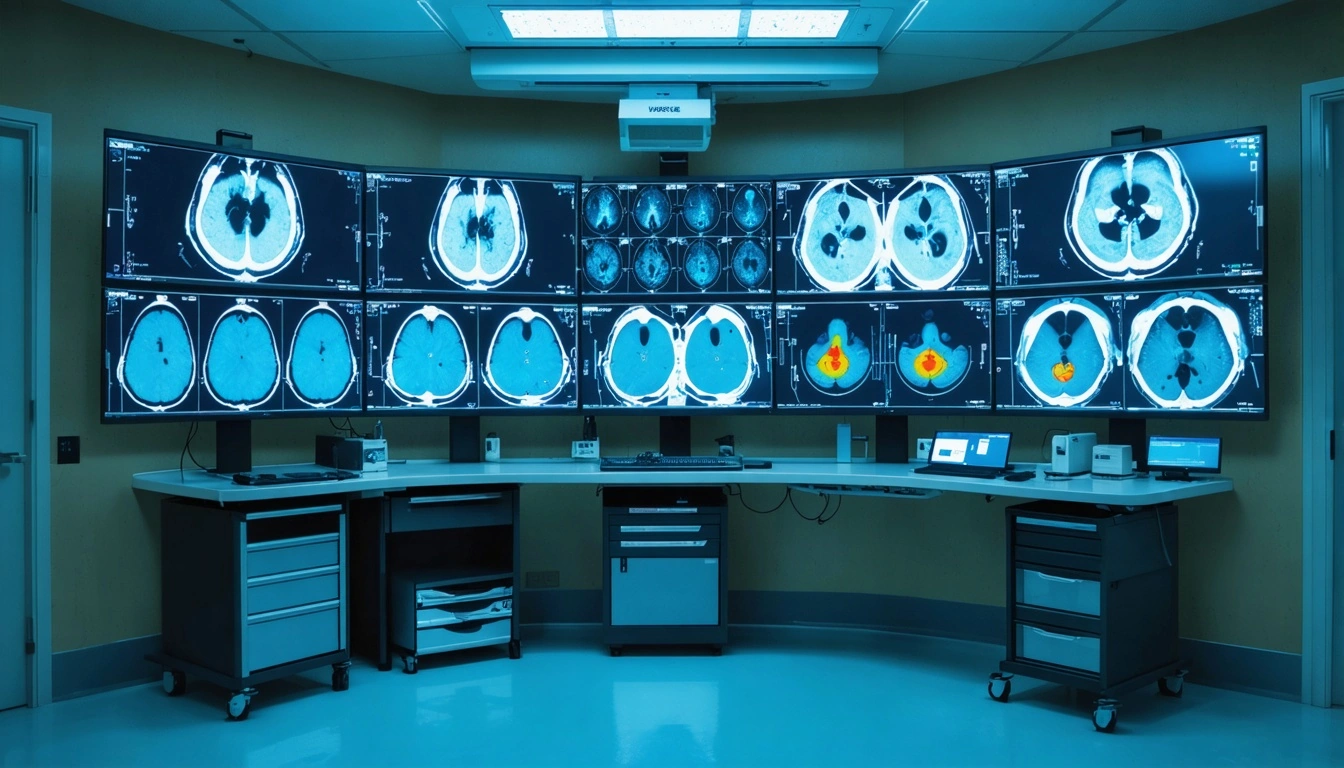
AIVOT analyzes the spatial relationship between each contoured OAR and the PTV, then automatically adjusts constraint priorities in the optimization to reflect patient-specific anatomy rather than applying fixed institutional defaults.
Community hospitals report fewer cases of plan re-optimization driven by suboptimal OAR sparing identified at physician review.
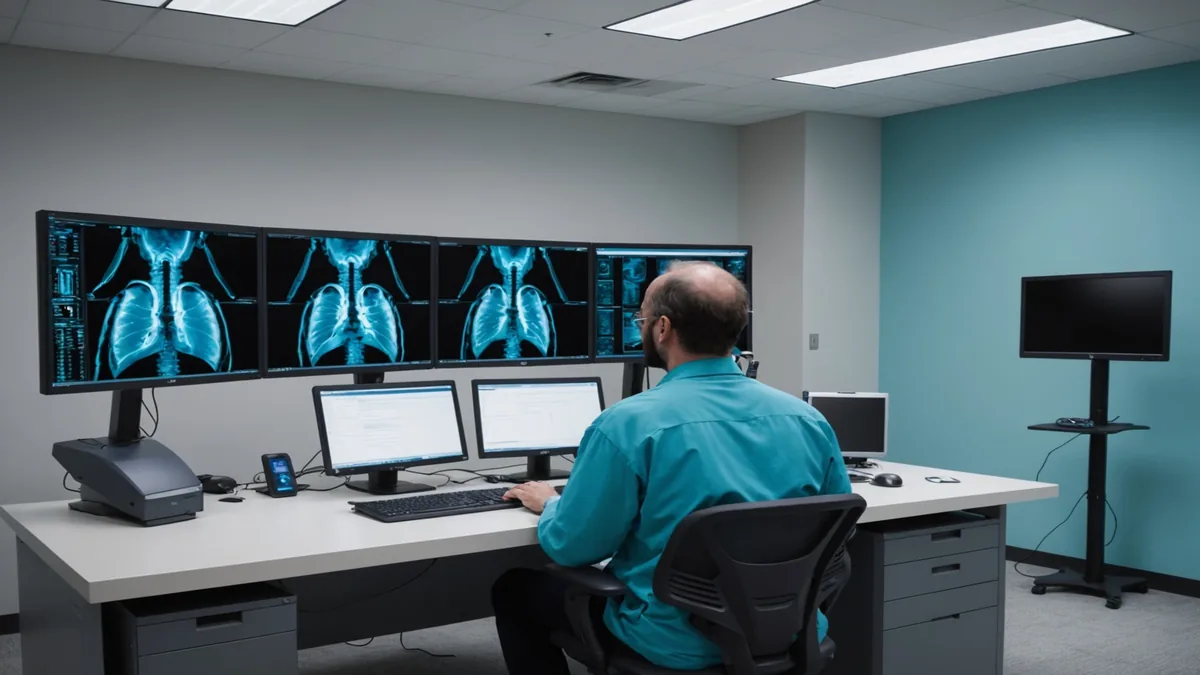
AIVOT operates entirely within the DICOM-RT standard. It receives contoured structure sets and CT images via standard DICOM-RT export, processes them in HIPAA-compliant cloud infrastructure (Japan JIS Q 27001 certified), and returns AI-initialized plan files as DICOM-RT RT Plan objects.
No HL7 or proprietary middleware required — the integration uses existing DICOM infrastructure already present in the department.
Upload the historical treatment plan archive and receive plan quality scores across the full dataset. Departments can identify systematic protocol drift — for example, where OAR sparing scores have declined over 12 months as personnel changed — and use the analysis to target dosimetrist training on specific treatment sites.
Retrospective audit runs independently from the prospective planning workflow and requires only DICOM-RT plan archive access.
AIVOT integrates with the treatment planning systems and oncology information systems your department already uses.
In pilot deployments at community hospital radiation oncology departments
Per plan with AIVOT initialization vs. 3.2 hours from scratch in pilot cohort
Plans passing physician review on first submission in prospective pilot cohort
DICOM-RT native integration works with existing department infrastructure
Our pilot program is designed for community hospital radiation oncology departments. Bring a representative sample of IMRT cases from one treatment site. We run AIVOT against your data and report plan quality scores, dosimetrist time, and first-pass physician approval rates — measured against your own department baseline, not a generic benchmark.