About Airato
Precision IMRT Planning Software from Sendai, Japan
Airato develops treatment planning software for radiation oncology departments. Our tools are built for medical physicists and radiation oncologists — technically precise, dosimetrically characterized, and designed to operate within established clinical review protocols.
What, Who, and How
What we build
IMRT treatment planning software — a beam configuration engine, a DVH-constraint dose optimizer, and an adaptive re-planning module — built to reduce the manual iteration burden on medical physicists while preserving their clinical judgment at every decision point.
Who uses it
Medical physicists and radiation oncologists at cancer centers and university hospitals in Japan, expanding to the broader Asia-Pacific region. Airato is sold to clinical departments through direct relationships — there is no self-serve access pathway. Hospital procurement teams can request regulatory and compliance documentation.
How it works
Airato operates as a DICOM node on the clinical network — receiving CT and RT Structure Set from the TPS, returning RTPLAN and RTDOSE for physicist review. The system generates candidates and optimizes against DVH constraints; the physicist reviews, adjusts, and approves before any plan proceeds to treatment delivery. Airato does not communicate directly with linac control systems.
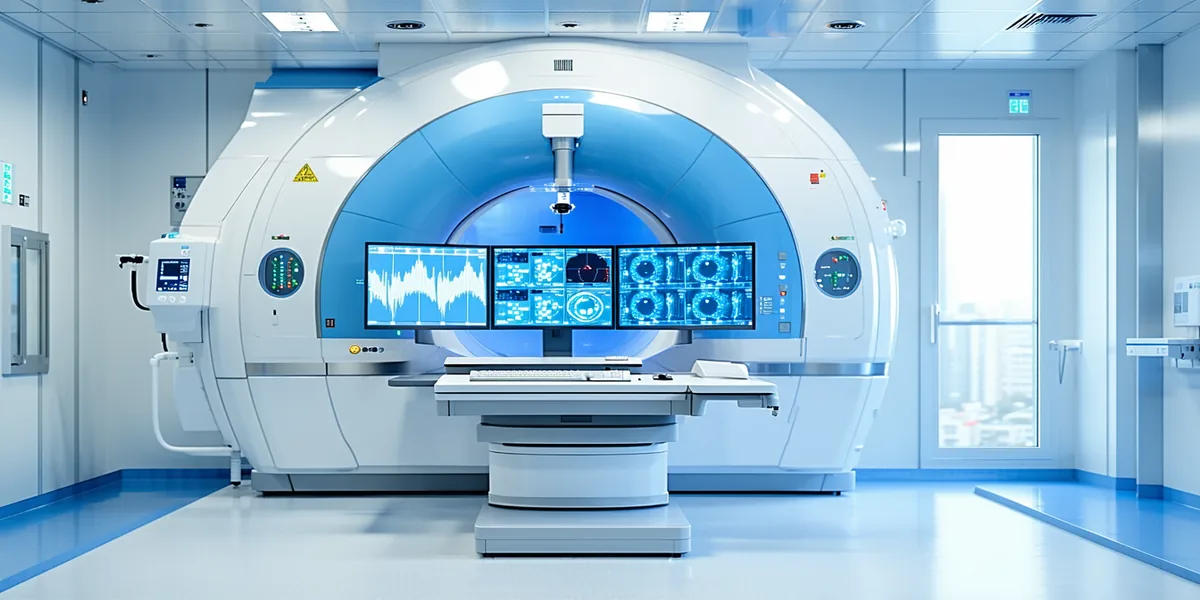
Close the Gap Between Dosimetric Best Practice and Daily Planning Capacity
Radiation therapy treatment planning is one of the most technically demanding tasks in oncology. A medical physicist carrying a high caseload — prostate, head-and-neck, and lung IMRT simultaneously, often under scheduling pressure — faces practical limits on how much time can be invested in optimizing each plan against all applicable DVH objectives.
Airato's mission is to provide the computational assistance physicists need to apply DVH-constraint optimization consistently across cases — without removing their clinical judgment from the process. The software generates and refines; the physicist evaluates and approves. That boundary is not a safety compromise — it is the design intent.
Clinical-First Development
Feature priorities driven by practicing medical physicists. We don't build capabilities the physics community hasn't identified as a genuine planning bottleneck.
Safety by Architecture
The system has no pathway to deliver a plan to a linac. Only the physicist can approve and export via the TPS. Software development lifecycle designed to IEC 62304 Class B requirements. Airato is a planning tool — not a treatment delivery system.
How Airato Started
Yuto Kimura founded Airato in Sendai in 2021 after spending time alongside medical physicists in academic cancer centers across the Tohoku region. The observation that shaped the company was specific: clinical physics research had established dosimetric benefits from multi-criteria DVH-constraint optimization for several years, but the tools that implemented these methods were either embedded in single-vendor TPS ecosystems or required expensive standalone licensing structures that put them out of reach for most departments outside major university hospitals. Physicists who understood the theory had no practical access to the implementation.
Airato was built to operate at the DICOM layer rather than through proprietary TPS APIs — making it TPS-agnostic and deployable alongside any DICOM-conformant system a department already uses. The development approach has been measured: working with radiation oncology departments in the Tohoku and Kanto regions since 2021 to characterize dosimetric performance, refine the physicist workflow interface, and build the quality system required for PMDA regulatory submission.
How We Approach the Work
Evidence before claims
We report dosimetric performance from characterized studies, flag the scope of those studies, and do not generalize beyond the data. If we haven't measured it against a defined cohort, we don't claim it.
Physicist autonomy by design
The medical physicist reviews and approves every plan. Every output is editable before optimization proceeds, and no plan can be exported without explicit physicist sign-off. Airato augments physicist capacity — it does not substitute for it.
Japan clinical standard first
DVH constraint libraries aligned with JSMP and QUANTEC reference values. PMDA regulatory pathway as the primary compliance framework. Japanese-language physicist interface. Asia-Pacific expansion builds from a grounded Japan base, not the reverse.
Meet the Airato clinical team.
Learn about the medical physicists and ML engineers behind the planning engine.